Mapping Transaction Routes: How Deposit Choices Influence Payout Timelines at Verified US Platforms
Written by Riley Koch · Jun 24, 2026
Mapping Transaction Routes: How Deposit Choices Influence Payout Timelines at Verified US Platforms
Transaction routes on verified US platforms follow distinct patterns that connect deposit selections directly to payout speeds, and observers note that these connections shape user experiences across regulated markets in states like New Jersey and Pennsylvania. Data from industry analyses shows that payment method choices determine processing layers, verification checkpoints, and eventual fund release schedules, while platform operators maintain compliance with state-specific rules that have remained consistent through mid-2026 updates.
Core Deposit Pathways and Their Structural Impact
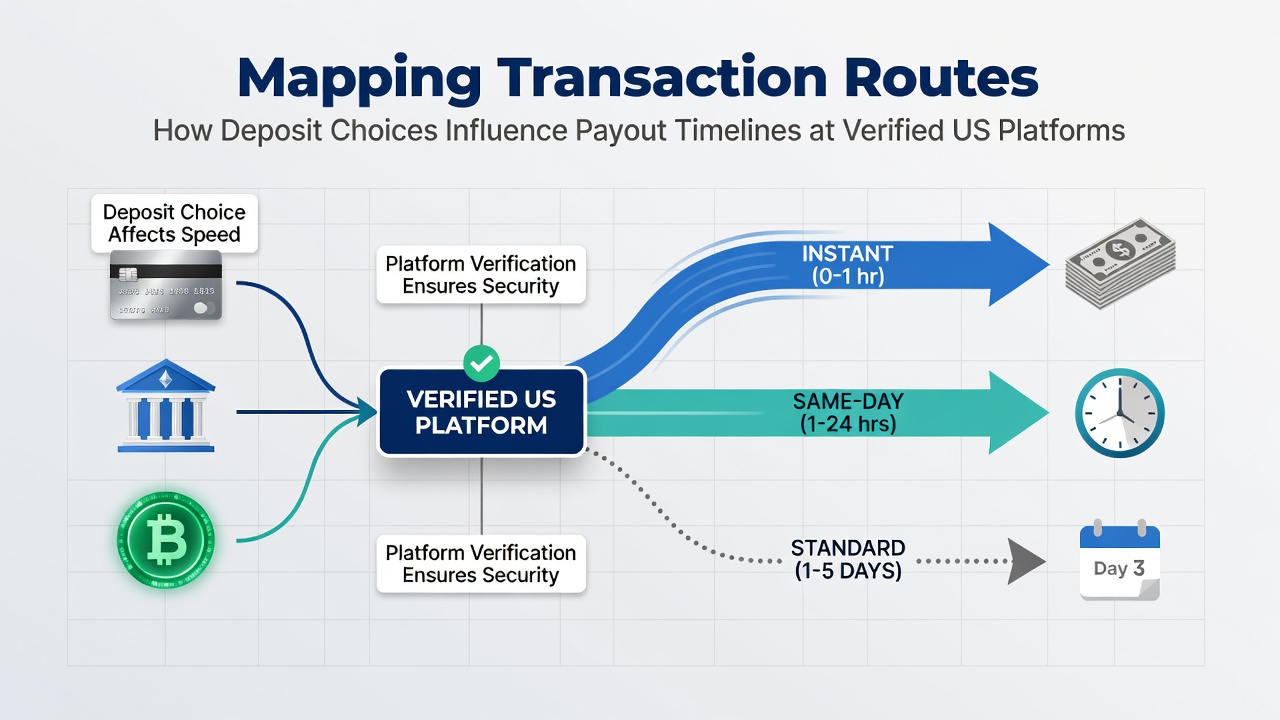
Bank transfers via ACH establish one primary route that links initial deposits to extended timelines because these systems route funds through traditional banking networks, and experts have observed that this path often requires additional confirmation steps before operators credit accounts for play. Credit card deposits create a different structure where authorization happens quickly yet reversals during payouts trigger separate compliance reviews that extend overall cycles. E-wallet options such as those integrated with major providers compress the route by handling funds outside direct bank channels, and figures reveal that these methods reduce intermediate hops between user accounts and platform ledgers.
Cryptocurrency deposits introduce yet another pathway that operates on blockchain ledgers independent of legacy finance systems, and researchers have documented how this independence can accelerate initial funding while creating unique reconciliation demands at withdrawal stages. Studies indicate that platforms verify crypto transactions through wallet address matching, which adds a distinct layer compared to fiat-based methods yet often results in faster net completion once approvals clear.
Verification Layers Tied to Payment Selection
Deposit choices influence the depth of identity checks that platforms apply before releasing winnings, and those who've examined these systems know that e-wallet users frequently complete verification during the deposit phase itself, which streamlines later payout requests. Bank-linked methods require cross-referencing with financial institution records, and data shows this process can add one to three business days depending on the state regulator's oversight protocols. Operators in markets active as of June 2026 continue to align these steps with evolving standards from bodies like the Pennsylvania Gaming Control Board, where transaction monitoring integrates with broader responsible gaming frameworks.
Wire transfers demand manual review because of their high-value nature, whereas smaller card-based deposits pass through automated systems that flag anomalies without halting the entire route. Observers note that users selecting prepaid options encounter intermediate account creation steps that insert extra verification nodes before any payout window opens.
Documented Payout Timelines Across Methods
Industry reports compiled through 2026 highlight clear differences in release speeds once withdrawals initiate. E-wallet payouts typically clear within 24 to 48 hours after approval because the same infrastructure used for deposits supports reverse transfers without new banking intermediaries. ACH withdrawals extend to three to five business days as funds traverse clearing houses, and this pattern holds across multiple verified operators serving US customers.
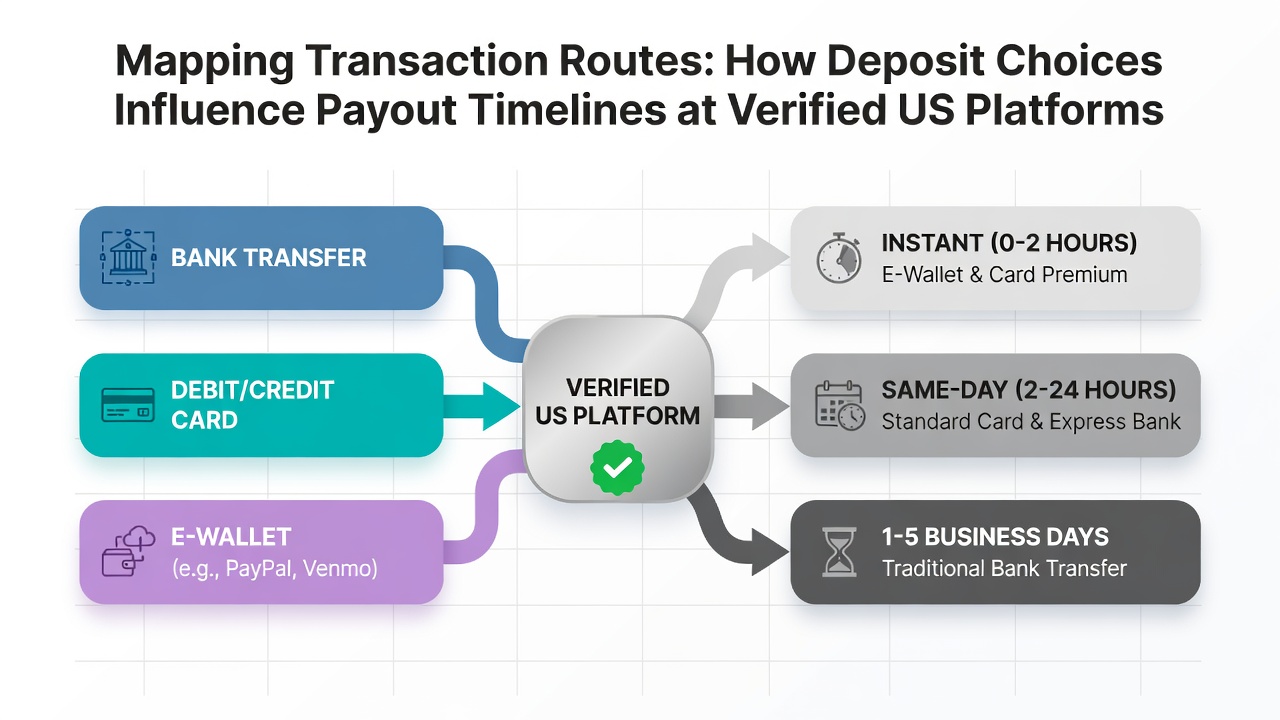
Credit card reversals follow issuer-specific rules that can stretch timelines to five or more days, while crypto withdrawals often finalize in under a day once wallet confirmations complete. Research from academic sources on digital payment adoption in gaming contexts shows that platforms using hybrid systems combining instant deposit confirmation with delayed payout approval maintain consistent user retention when timelines match published expectations.
Regulatory Influences on Route Efficiency
State regulators enforce record-keeping requirements that affect how quickly platforms can process any given method, and authorities in Nevada have issued guidelines emphasizing transaction traceability that favors certain digital routes over others. Canadian provincial frameworks provide comparative data points where similar deposit-payout linkages produce measurable differences in average completion times, and these international benchmarks help US operators refine their internal mapping. Academic papers examining financial flows in regulated environments confirm that method selection correlates strongly with overall timeline predictability rather than platform size alone.
One study revealed that platforms integrating real-time monitoring tools reduce variance in payout windows regardless of the deposit origin, and those findings align with operational data shared among industry associations focused on North American markets. External factors such as weekend banking closures further modulate ACH and wire routes while leaving e-wallet and crypto options largely unaffected.
Conclusion
Transaction route mapping demonstrates that deposit method selection establishes the foundation for payout timelines on verified US platforms, and evidence from regulatory filings along with payment processor statistics confirms these linkages remain stable through 2026. Operators continue to publish method-specific estimates that reflect the structural differences outlined across banking, digital wallet, and cryptocurrency channels, allowing users to align choices with their timing needs within compliant environments.