Navigating Payment Landscapes in United States Betting Markets: Methods and Their Effects on Bettors
Written by Harper Günther · Jul 29, 2026
Navigating Payment Landscapes in United States Betting Markets: Methods and Their Effects on Bettors
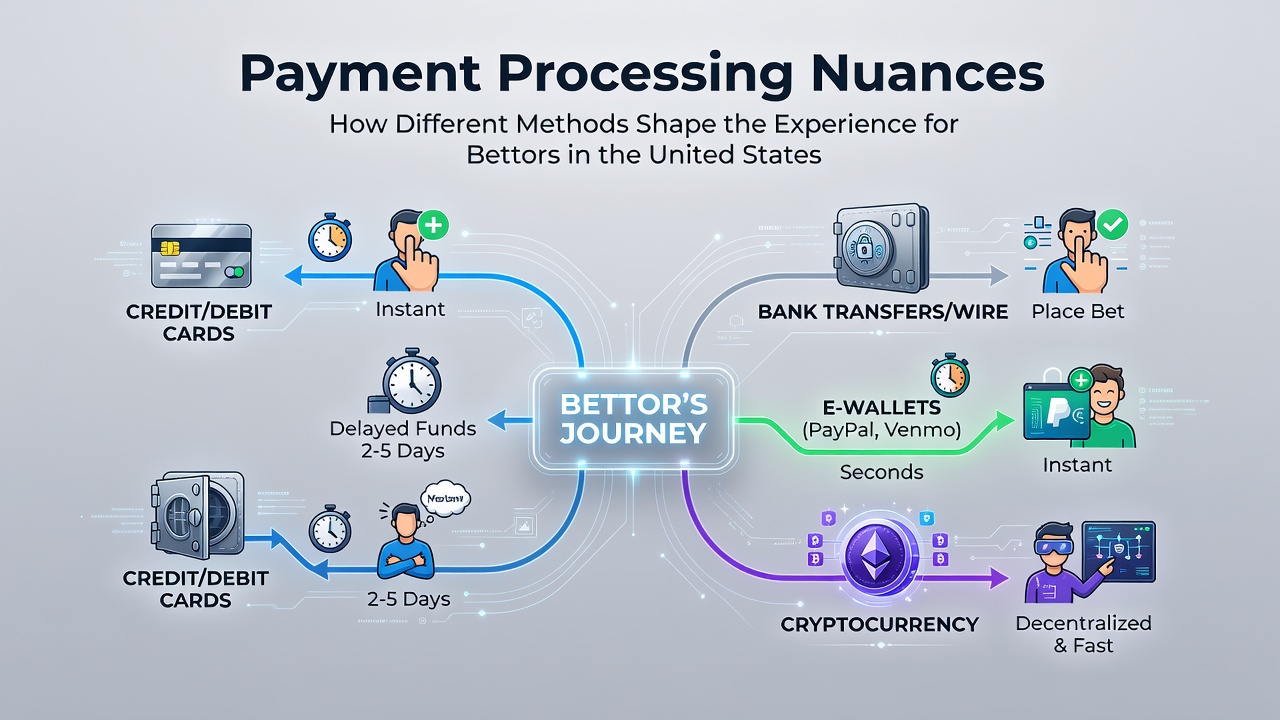
Payment processing in United States betting markets involves a range of methods that determine transaction speed, verification requirements, and accessibility depending on state regulations and operator policies, while data from the American Gaming Association indicates steady growth in digital options through mid-2026.
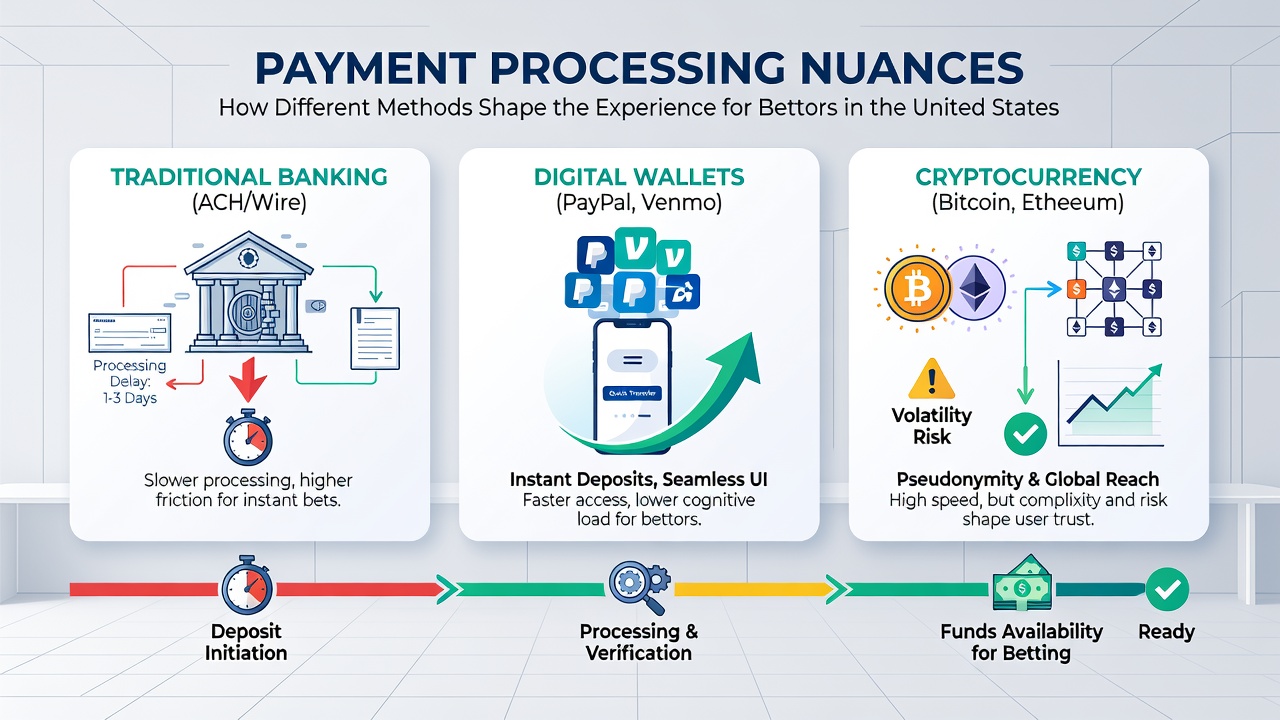
Credit and debit card transactions remain common because they integrate with most platforms yet often face declines at certain banks due to internal policies, whereas ACH bank transfers provide lower fees and higher limits but require one to three business days for settlement in many cases.
Core Payment Categories and Processing Timelines
Electronic wallets such as PayPal and Venmo operate in states where operators partner with these services, delivering near-instant deposits for verified accounts while withdrawals typically clear within twenty-four to forty-eight hours once identity checks complete, and prepaid cards offer anonymity advantages though they cap at fixed amounts and complicate larger payouts.
Cryptocurrency transfers using Bitcoin or stablecoins appear in a growing number of licensed sportsbooks following regulatory approvals in states like New Jersey and Pennsylvania, with blockchain confirmations enabling same-day movement yet exposing users to volatility that platforms mitigate through conversion tools at the point of deposit.
State-Level Variations and Verification Requirements
Regulatory frameworks differ across jurisdictions so that users in Nevada encounter stricter KYC procedures for wire transfers compared with Michigan where mobile apps streamline card linkages, and observers note that July 2026 brought expanded testing of instant settlement pilots in Colorado that reduced average withdrawal times from seventy-two hours to under twelve for select methods.
Bank wires suit high-volume bettors because they bypass daily card limits yet incur intermediary fees that range from fifteen to forty-five dollars per transaction according to figures released by the Federal Reserve Bank of New York, while e-check options combine elements of ACH with faster crediting in partnered systems.
Impact on User Experience and Account Management
Deposit failures trigger additional verification steps that delay betting activity, and those who study transaction logs find that repeated card declines correlate with higher account suspension rates across multiple operators, whereas consistent use of linked bank accounts tends to accelerate approval cycles for larger withdrawals.
Platforms maintain separate ledgers for each method so that funds deposited via cryptocurrency cannot transfer directly to a card balance without an intermediate conversion step that may add small spreads, and researchers at the University of Nevada Las Vegas documented these friction points in a 2025 analysis of user behavior across six states.
Security protocols including two-factor authentication and device fingerprinting apply uniformly yet create longer onboarding for first-time users who select wire options because banks require additional confirmation codes before releasing funds to gambling merchants.
Emerging Trends and Cross-Border Considerations
Stablecoin adoption continues to rise in markets where operators list them as primary options, reducing exposure to exchange rate swings that affect international card transactions, and reports from the Reserve Bank of Australia on cross-border payment efficiencies have informed some US state discussions around standardized settlement rails.
Users who maintain multiple verified accounts across methods gain flexibility during peak periods when one channel experiences temporary outages, while single-method reliance can interrupt planned wagers until support resolves the issue.
Conclusion
Payment method selection shapes every stage from initial funding through final cash-out in United States betting environments, and ongoing regulatory updates plus technological pilots continue to alter timelines and costs in measurable ways as of July 2026.