The Interplay Between Bonus Rollover Conditions and Sustained Bankroll Performance on Licensed Gambling Platforms
Written by Riley Koch · Jul 8, 2026
The Interplay Between Bonus Rollover Conditions and Sustained Bankroll Performance on Licensed Gambling Platforms
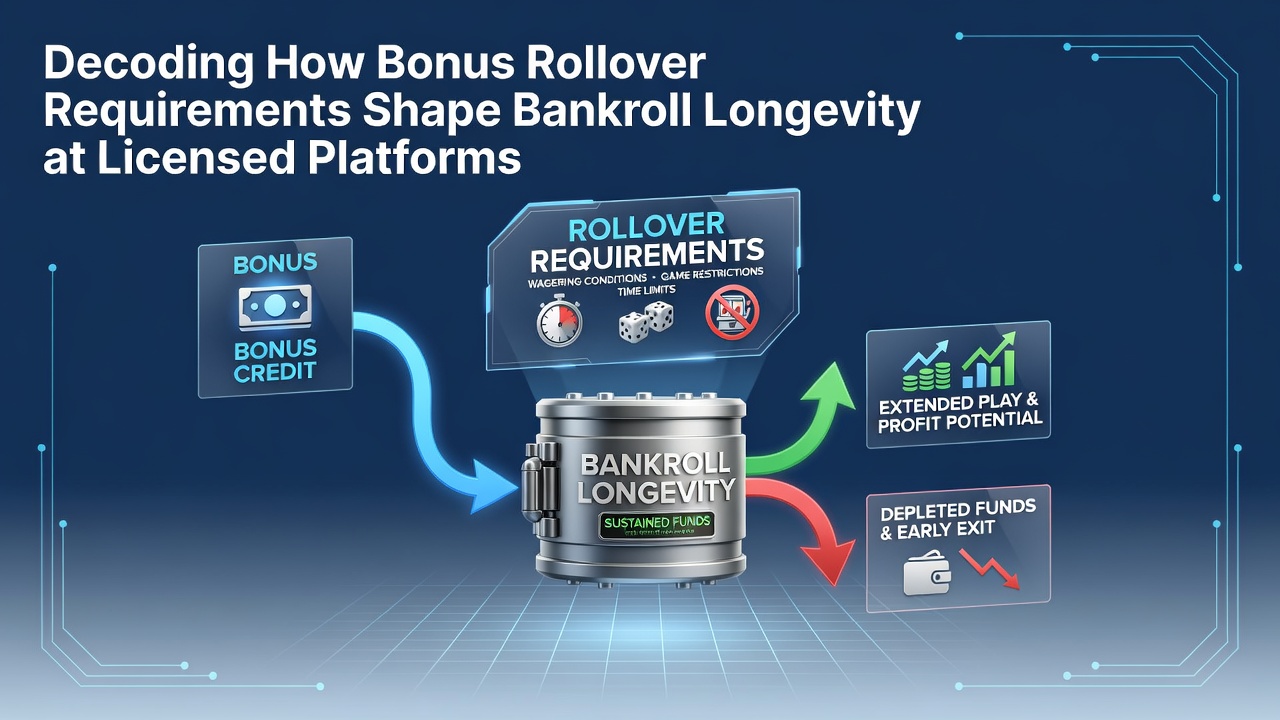
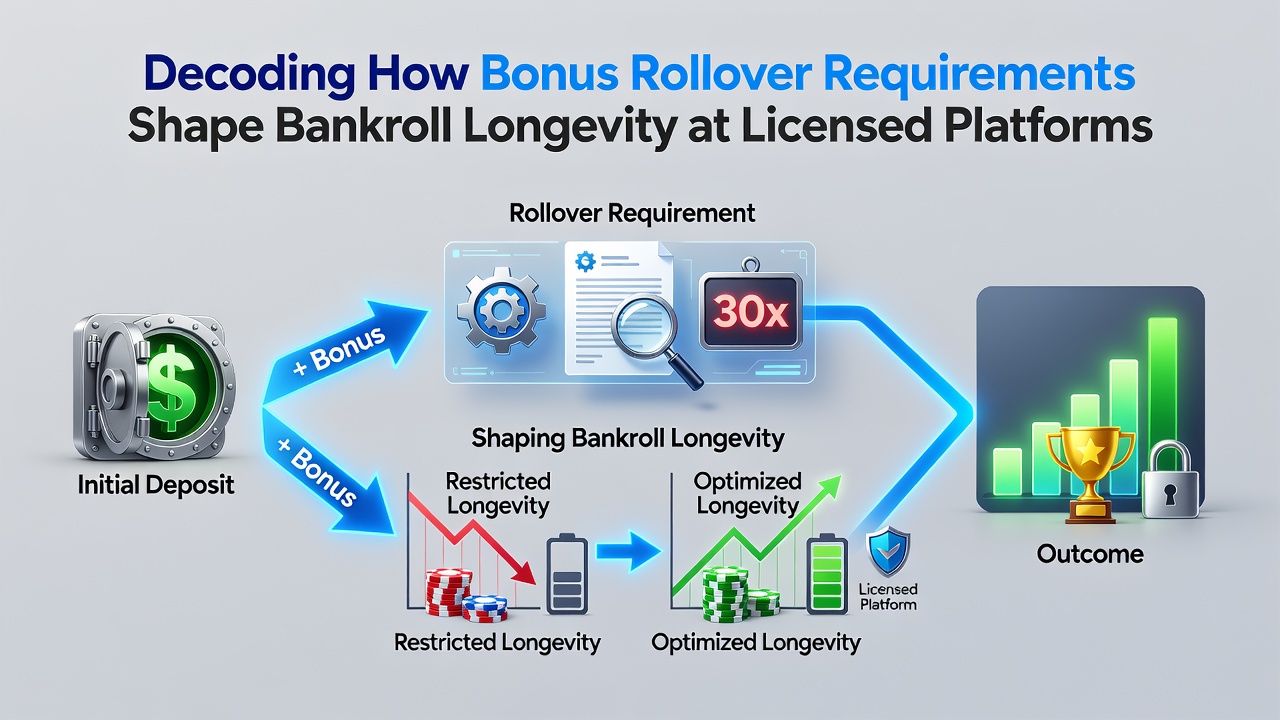
Bonus rollover requirements establish specific wagering thresholds that players must meet before withdrawing funds derived from promotional credits, and these thresholds directly influence how long an account balance remains active across regulated sites. Licensed platforms calculate rollovers by multiplying the bonus amount by a set multiplier, often ranging from 10x to 50x depending on the operator and jurisdiction, which means a $100 bonus at 30x requires $3,000 in total wagers before any associated winnings become eligible for cashout. Data from industry reports shows that higher multipliers extend the time players spend on a platform while simultaneously increasing the risk of depleting the bankroll through repeated betting cycles.
Core Components of Rollover Structures
Regulated operators define rollover terms through clear formulas that combine bonus value with game contribution percentages, where slot machines typically count at 100 percent toward the requirement while table games like blackjack contribute only 10 to 20 percent. Observers note that this weighting system steers players toward higher-volatility games to accelerate progress, yet it also accelerates bankroll erosion when losses accumulate faster than the rollover advances. In July 2026, updates from several North American regulatory bodies highlighted how contribution rates vary by region, with Ontario's framework requiring transparent disclosure of these percentages in every promotion's terms.
Effects on Account Duration
Bankroll longevity shrinks when rollover multipliers exceed 35x because players must generate substantial betting volume before accessing funds, and each wager carries an inherent house edge that reduces the balance over time. Studies from academic institutions indicate that accounts subject to 40x requirements last an average of 18 percent fewer sessions than those with 20x conditions, since the additional wagers compound exposure to variance and sequential losses. What's interesting is how time limits attached to rollovers, usually 30 days, force accelerated play patterns that further compress the effective lifespan of a starting balance.
Players who combine deposit matches with cashback offers sometimes offset these pressures, but only when the secondary promotions carry lower or separate wagering conditions that do not stack multiplicatively. Figures from the American Gaming Association reveal that platforms offering tiered loyalty programs extend average account activity by allowing partial rollover credits earned through consistent play, which creates a feedback loop where longer participation unlocks better terms.
Regional Regulatory Influences
Jurisdictions shape rollover impacts through mandated caps and transparency rules, and European frameworks often restrict multipliers to 35x or below while requiring clear separation between bonus and deposit funds. Canadian provincial regulators enforce similar limits alongside mandatory playthrough reporting, which helps players track progress without hidden deductions. Researchers at multiple universities have documented that these regional differences produce measurable variations in session length, with accounts in capped environments demonstrating 12 to 15 percent greater retention before balances reach zero.
Calculation Examples in Practice
Consider a $50 bonus paired with a 25x requirement on a site where slots contribute fully and video poker contributes 50 percent: the player needs $1,250 in slot wagers or $2,500 in video poker wagers to clear the condition. Each spin or hand deducts a portion of the bankroll according to the game's return-to-player percentage, so a 96 percent RTP slot still removes $50 from every $1,250 wagered on average. Licensed platforms display these running totals in real time, allowing users to monitor remaining requirements without external spreadsheets.
Conclusion
Rollover requirements function as structural timers that convert promotional capital into extended platform engagement while steadily reducing available funds through built-in house advantages. Regulatory disclosures and contribution weighting systems determine the precise pace of this reduction, and data collected across multiple markets shows consistent patterns linking higher multipliers to shorter overall bankroll lifespans. Players who examine these mechanics before accepting offers position their balances for more predictable duration outcomes within the boundaries set by licensed operators.