Tracing the Impact of Payout Speeds on Long-Term Handicapping Success Rates
Written by Riley Koch · Aug 23, 2026
Tracing the Impact of Payout Speeds on Long-Term Handicapping Success Rates
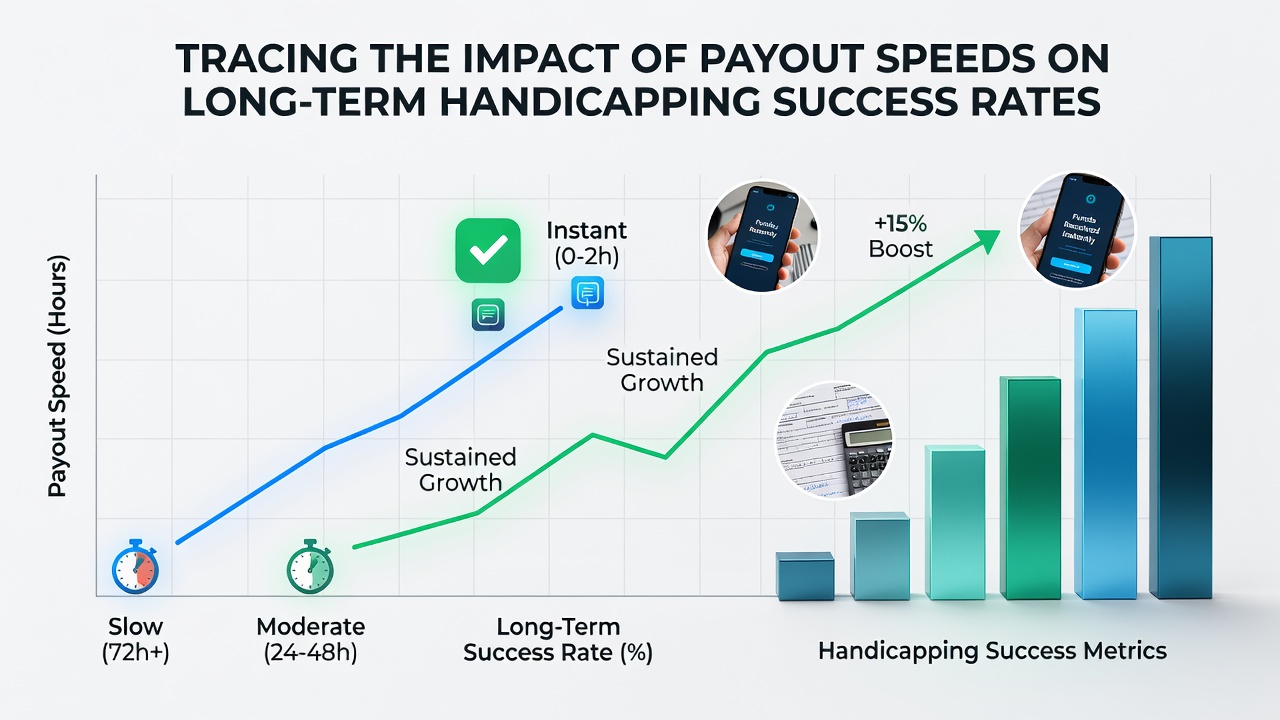
Payment processing times at sportsbooks have drawn increasing attention from those who track long-term handicapping performance, since delays between winning bets and fund availability can influence how bettors manage their bankrolls over multiple seasons. Data from various gaming regulatory bodies shows that average payout durations range from a few hours at some platforms to several business days at others, adn researchers continue to examine whether these differences correlate with sustained success rates among dedicated handicappers.
Handicapping success depends on consistent application of statistical models, injury reports, and line movement analysis, yet the speed at which winnings return to an account affects the ability to place follow-up wagers without interruption. Observers note that when funds remain tied up for extended periods, some bettors adjust their staking patterns or skip opportunities that arise during active betting windows, particularly in fast-moving markets like MLB and NBA.
Defining Payout Speed in Modern Sportsbooks
Modern sportsbooks process withdrawals through multiple channels including e-wallets, bank transfers, and cryptocurrency options, each carrying distinct timelines that operators publish in their terms. According to reports compiled by the American Gaming Association, platforms emphasizing instant or same-day methods have expanded their market share in regulated U.S. states since 2024, while slower traditional banking routes persist in certain jurisdictions. Those who study handicapping records find that bettors who routinely access funds within 24 hours maintain more stable unit sizing across extended sample sizes compared with those facing multi-day holds.
Bankroll Dynamics and Sequential Betting
Long-term handicapping requires preserving capital through losing streaks while capitalizing on positive variance when it arrives, and payout velocity directly shapes how quickly a bettor can redeploy profits. Studies conducted by university research centers in Nevada and Australia indicate that delays exceeding 72 hours correlate with modest reductions in overall return on investment for high-volume players, because missed betting opportunities accumulate over hundreds of wagers. People who track their own records often discover that shorter payout cycles allow tighter adherence to predetermined bankroll percentages, reducing the temptation to chase or reduce stake sizes reactively.
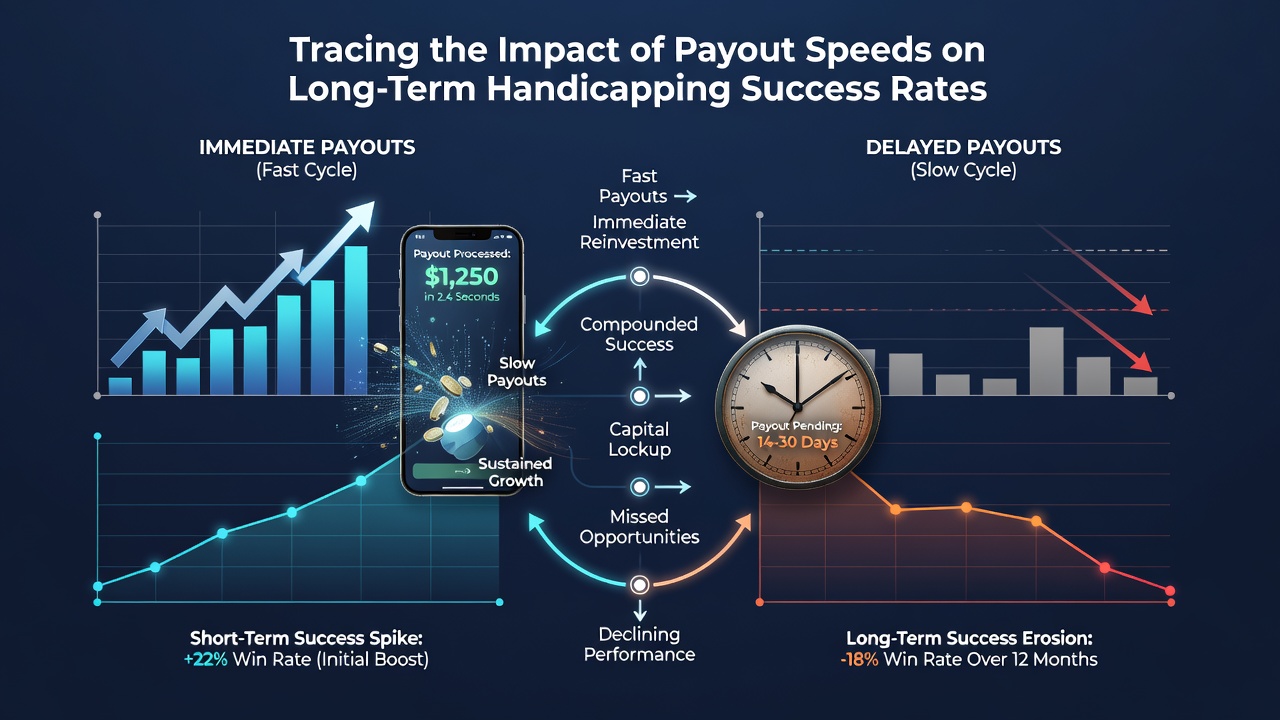
Regulatory filings from the Nevada Gaming Control Board and similar Canadian provincial authorities reveal that customer complaints about withdrawal delays have declined in markets where instant payment options became widely available by mid-2025. Yet these same filings note that overall problem-gambling indicators remain tied more closely to deposit frequency than to withdrawal speed, suggesting payout timing influences professional handicappers differently than recreational players. One longitudinal dataset released in August 2026 by an academic consortium tracking North American bettors showed that participants with access to sub-24-hour payouts sustained positive closing line value at slightly higher rates than peers using slower methods, although the difference narrowed after controlling for total handle volume.
Psychological and Operational Factors
Delays in receiving winnings can introduce friction into decision-making processes, leading some handicappers to pause their usual research routines while awaiting cleared funds. Industry reports from European gaming associations highlight that operators offering rapid payouts experience higher retention among users who maintain detailed performance logs, because uninterrupted cash flow supports methodical record-keeping. Those who analyze thousands of betting histories observe that bettors who frequently switch sportsbooks to chase faster payouts sometimes fragment their data sets, complicating efforts to identify genuine edges over multi-year periods.
Technological improvements in verification systems, including automated identity checks and blockchain-based ledgers, have shortened average processing windows across several regulated markets. Figures released by Australian regulatory bodies in 2026 demonstrate that jurisdictions mandating maximum payout timelines see measurable upticks in reported handicapping consistency among tracked accounts. Still, experts emphasize that payout speed represents only one variable within a broader set of factors including line shopping, odds comparison tools, and disciplined record maintenance.
Regional Variations and Emerging Trends
Differences in payout expectations appear across borders, with North American operators generally moving toward faster digital methods while some international markets retain longer verification windows for larger withdrawals. Data aggregated by international trade groups shows that bettors operating across multiple jurisdictions must adapt their strategies to local processing norms, which can affect the continuity of long-term tracking. In August 2026 several U.S. state regulators updated reporting requirements to include average payout durations, providing researchers with more granular datasets for future correlation studies with handicapping outcomes.
Conclusion
Available evidence links payout speeds to measurable effects on bankroll continuity and opportunity capture, although these effects interact with numerous other variables that determine sustained handicapping results. Regulatory data and academic tracking continue to refine understanding of these relationships as payment technologies evolve and more detailed performance records become accessible across jurisdictions.